Wednesday, April 30, 2008

New Beginnings: Middle School Spring Retreat

Prayer: a talk for youth grades 6-8
Delivered Sunday, April 27, 2008, Gravatt Camp and Conference Center

Our Father, who are in heaven…

The Lord is my shepherd, I shall not want…

Dear God,

Now I lay me down to sleep…

(singing) Oh God, you are my God, and I will ever praise you…

Oh God, oh God, oh God, oh God…

Sound familiar?

Prayer is an important part of our life and practice as individual Christians, and as Christians in community. But what is it? What is the purpose? What does it do?

Our prayer book describes prayer as “responding to God, by thought and by deeds, with or without words.”

What? I though the only way to pray was on my knees on Sunday morning hands together, eyes closed, memorized or otherwise…

Prayer makes itself present in many ways and in many places in our lives.

Some of you have memorized morning and bedtime prayers that you say each night before bed. Some of you pray on Sunday mornings with your congregation. Some of you might pray when you are doing other things like running, or knitting, singing playing an instrument, or a favorite sport, or working on a piece of art…there are many, many ways to pray.

What makes something prayerful, according to the definition that I said just a moment ago – is that it is about intentional – intended communication with God.

That can mean – starting an initial gathering with a prayer – to name to fact that God is present with us and we as a community wish to offer the joy and the learning that comes from being together to the creator who allowed us to gather.

It can mean taking time to be quiet, especially in times of high stress, or grief, or uncertainty – to be quiet and to listen for God, to give a little of yourself – your time, your attention to allow God to speak to you – your life your questions – your concerns.

It can mean flipping through the prayer book, or another resource and reading prayers in your head or aloud.

It can mean taking a pen and paper and writing a letter or journal entry in conversation with God.

Anytime that you take a moment to remember and recognize God’s presence in your world – in your life – in your gathering of friends and family – you are praying. Think about that the next time we sing the Johnny Appleseed song for a meal at grace – am I doing this for my own benefit, or am I doing this to honor God in thanksgiving for his presence at this meal and the food from creation that will nourish me today?

There specific types of prayer – and if you know the one that is most common to us, the one Jesus taught us to pray – the Lord’s Prayer – then you’ve got a great guide book to remembering the kinds of prayers that can be offered.

Our Father who art in heaven, hallowed be thy name… God – you are amazing, and your name is worthy of praise – of being honored above all names – because you are the creator God – source of light and life. Way to go! Good job! - that is called praise – giving God the thumbs up. (praise)

Thy kingdom come, thy will be done, on earth as it is in heaven… God, you created us and you want us to live in the way that is best for us – help us to let your will for our lives and our relationships be the one that we follow – and not just our own – because following our own will gets us in trouble sometimes. Help us Lord to follow your will. This is a prayer of oblation – making our purpose to be in line with God’s. (oblation)

Give us this day our daily bread… God – we have needs – we need to be nourished, we need shelter and to be cared for – we thank you for providing us with those needs and ask that you help us remember the needs of others – after all – some of us have more than we need, and others don’t have as much as we do…help us to only take and use what we need, and help us to remember to share with others when we realize that they don’t have all they need. (thanksgiving)

And forgive us our trespasses as we forgive those who trespass against us… God, sometimes we mess up – BIG TIME – be with us in the times when we make mistakes – when we let our desires get in the way of how you would have a be in the world – how you would have us care for one another. When our actions hurt someone we love, or someone we find very difficult to love – help us to make amends – and help us to do it better next time.

And God, when someone hurts us, when someone hurts a friend, when someone hurts you, help us to find a way to forgive them too. It’s hard lord – especially – when they don’t even know how much we are hurting, or we feel powerless to stop them from hurting us and others again – give us patience, and the strength to face them and to forgive them for the mistakes they are making – because we know that we too have made mistakes, and we too will make them again. (Confession/reconciliation/forgiveness)

And lead us not into temptation, but deliver us from evil.

God, sometimes I have the chance to do something that I know you would not like. Sometimes my friends pressure me to do the things and sometimes I catch myself pressuring friends to do these things. Help me to make good choices, to walk a path that keeps me safe from hurting other people and from being hurt by others. (intercession/petition)

For thine is the kingdom and the power and the glory, forever and ever, Amen.

God, sometimes I am amazed at how great you are – that you aer with me in all things, in all times and in all places. Help me to always remember that you are here for me and that I can share that love with others who do not know you, or how present you are in all things. (adoration)

The Lord’s Prayer, the pray that Jesus taught us, reminds us to be thankful, to seek forgiveness, to forgive others, to praise god, to adore Gods’ greatness and to form our own lives according to God’s will.

There are many ways to pray – you may have been a person of prayer in many ways all along without even realizing it. When you think of a friend in need and then reach out to them, offer their name to god. When you are hurting or sad, ask for God’s presence – remember God is there with you, always. All you have to do to pray is remember that and respond to god’s presence in your thoughts, words or deeds.

Amen.


Monday, April 21, 2008

I am the way and the truth and the life...

5 Easter, Year A, RCL

Acts 7:55-60
Psalm 31:1-5, 15-16
1 Peter 2:2-10
John 14:1-14

I am the way and the truth and the life.

Anytime I hear a passage from the Gospel of John I am amazed at how this evangelist is able to pack a theological punch in just a few short verses. In this mornings passage alone – line after line of scripture challenges, the hearer to reflect on what it means to be a follower of Jesus – what it means to be a Christian.

Have you been with me all this time and still you do not know me?

In my Father’s house there are many dwelling places.

If you know me, you know my Father also.

I am the way and the truth and the life.

My reflections on this passage led me to the realization that though I have been serving the Episcopal Church of Our Saviour for almost two years now – I have preached the gospel, celebrated the Eucharist, baptized children, and walked among you as a person of faith, a person of prayer, a follower of Jesus; but I don’t believe that I have told my story – the story of why I am a Christian.

Like many of you, I was raised in a church-going home – my family is Episcopalian and I attended several different Episcopal Churches through my childhood and high school years. I was trained and well practiced in the ways of Episc-aerobics – stand up to pray, kneel to pray, stand to sing, sit down in between, pick up the hymnal, pick up the prayer book, hands up, hands across the chest, hands together, etc. etc. etc.

Now, I’ll admit, my earliest memories of church as a child were of very, very cold air conditioning – (remember I lived in Arkansas until I was nine,) short sleeved dresses, and leaning into the warmth of my mother’s body. I also remember singing hymns – even before I could read – but thanks to the organ, always feeling the pitch in the center of my chest.

As a child I was formed to be an Episcopalian – so much so that when I visited other churches where communion was not the norm, and remaining seated – even during prayer, and the Gospel – things just didn’t feel right. I wasn’t sure I had “done church” not having received communion.

From the beginning being in church was a full body experience, and one that made sense – that fit me quite well. Much of my earliest formation was about being a part of a community, and its practices, so that I felt I had a place there; I knew how to act and respond to the cues of the liturgy. It had little to do with actual faith in God, or understanding who Jesus was – though I’m certain that I heard countless sermons and Sunday school lessons about Jesus – mostly I just knew I belonged there.

Have you been with me all this time and still you do not know me?

When I was nine years old my family moved from the home I had always known in Arkansas to a suburb of the twin cities in Minnesota. For both of my parents the move was right for their careers, education and a return to the upper Midwest where both of them were born and raised and where both sets of my grandparents were within an easily drivable distance from our new home. My older brother struggled more than any of us with the move – particularly as a Jr. High school student, dealing with adolescence and a new community, making new friends, trying to understand his place and way of being in an unfamiliar culture, and climate. We had a new Episcopal Church – and the worship experience and practices were enough the same that we knew what to do, how to act, how to function in that place. At least that experience was stable; there we knew how to be.

In my Father’s house there are many dwelling places.

By the time I entered Jr. High school my brother had been in a downward spiral for several years – drugs, alcohol, you name it, my brother was into it. I lived in a house that was rarely peaceful, or happy. My parents worked, my brother partied, and I took long rides on my bike when the weather permitted my escape.

As with any child growing up – what I knew was normal – it was far from perfect, but it was my house, my family, and my situation to live with until something or someone changed.

My best defense-mechanism was invisibility – I would just disappear, and let the rest of them battle it out – it rarely had anything to do with me anyway.

I assumed that I was invisible to everyone… I assumed that no one could see or hear all that was taking place in my house – the struggle my parents had to care for and discipline their rebellious child – the difficulty of keeping up appearances, even when things seemed to be at their worst, and the fear of what it might mean to let a child fall hard enough that they might take responsibility for their own self, their own actions.

Meanwhile – I kept myself together reading books and being an escape artist. Until one day, someone invited me out to lunch. It was the youth minister at my church – someone who I knew through acolyting and some youth events that I had attended. It was summer time and we met up at a little restaurant in downtown.

Lord we do not know where you are going, how can we know the way?

I thought we were just going for lunch. I thought we were just saying hello over the summer. I thought nothing much of it at all – until she asked me how I was doing… until she let me know that she could see me, and could see that things were not so great at home. I thought I was fine – but I wasn’t.

If you know me, you know my Father also. From now on you do know him and have seen him.

The day that I was saved, the day that I met Jesus, was the day that I realized I could be seen – and not only was I seen – and made real, special, important on that day – but I was seen for the simple fact I was a child of God.

And on that day a follower of Jesus, one who knew God’s love deeper than anyone else I knew at the time, did one very simple thing. She had faith in the Jesus’ words, “I am the way and the truth and the life.” Responding to those words on that day for her meant doing the work that Jesus would have done – reaching out to the lonely, the hurting, the vulnerable.

I don’t think we spoke a word about Jesus that day – except perhaps when we gave thanks for the meal that was before us. But as I have reflected over the years on how and why I follow Jesus – why I can stand here and uphold Jesus’ words, “I am the way and the truth and the life” it relates back to that day – that moment in my life when I met Jesus at the supper table.

I am the way and the truth and the life.

On that day, through a deep connection with another human being, I was seen by and I saw Christ. I understood the words, “I am the way” because it was exemplified to me in the words and actions of one who reached out to me in my greatest need. As members of a Christian community, we are called to bear that story not only on our lips but in our lives. As followers of Jesus, we are called to care for one another and for those in need by being Christ for others, by being companions, and sometimes vessels on the way.

In theological terms we can discuss this passage by reflecting on it’s placement in the Gospel of John – conversation the Jesus had with his disciples at the last supper – described as the farewell discourse. Jesus’ laying the groundwork for our Trinitarian understanding of God as he describes the mutual indwelling of God in Christ, and Christ in God, followed by the next verses that describe third party of the trinity with the impending arrival of the Holy Spirit…

But in reality – in day to day language – in relationship with one another… the words, I am the way and the truth and the life – these words are alive in my life because someone who had faith in their strength, and meaning lived up to them. At my greatest moment of need – one spoke the truth, one valued my life and one invited me to join them on the way as a fellow member of the family of Christ, a community that was there for me outside of my small and struggling family system. On that day I claimed the birthright that I received at my baptism and began to own the teachings and the ways of a life of Christian faith and practice. My preparation as a church-goer was complete. My life as a faithful participant in the Christian community had just begun.

When the Christian Community is at its best – it has faith in and reflects these things in its words and deeds. When we as Christians are at our best – we know ourselves well-enough to know why we are here, why we do what we do, and as a result we are motivated to share that part of ourselves with others – through our words, through our actions, through our lives as they are lived out in the world.

Today I shared with you a portion of my faith story. This week as members of our congregation take the final steps to affirm their commitment to be active members of the Christian community through confirmation in the Episcopal Church, let us each reflect on why we are here, why we are called to follow Jesus, and are committed and practicing Christians – when did you find yourself on “the way” and where is it calling you to go? Who is it calling you to be, how are you articulating and sharing the parts of your story that allow you to have faith in the words of Jesus, “I am the way and the truth and the life.”

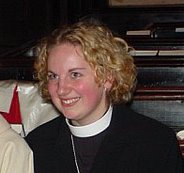
Delivered by the Rev. Mary Catherine Enockson

April 20, 2008, The Episcopal Church of Our Saviour, Rock Hill, SC

Wednesday, March 5, 2008

Lent 2, Year A, RCL

Genesis 12:1-4a
Romans 4:1-5, 13-17
John 3:1-17
Psalm 121


It is the second Sunday of Lent, and we have gathered once again to hear the voice of our ancestors through the traditional scriptures, the traditional words of our liturgy, and to engage in the traditional practice of receiving the body of Christ through the Holy Communion as we gather together at the table.

But as a congregation under construction, we are in the midst of a many new practices. We have the new practice of using our prayer books (though not new in the grand scheme of things, it’s something we have to get used to again as a community.) We have to get used to sitting in these chairs – sometimes a little closer to our neighbors than we are accustomed to – we can see each other a little closer up – see the altar from a new perspective – see one another’s faces up close and personal. We have had to come up with new solutions to having coffee hour and parish hall events in this space and we’ll continue to live with the newness that occurs in the midst of transition.

I have been contemplating all of the newness in the midst of that which is very traditional, the many and wonderful preserved traditions that our Episcopal church upholds, and that ultimately our restoration work is committed to. We are updating those things that are old, worn out and in need of repair or replacement, but we are doing so by returning them to their original beauty, their traditional look, their historic impression.

When we return to our worship space – it will ultimately look like the same church – and yet, it will have undergone a major transformation – one that new members down the road or visitors or young people a generation away from now won’t be able to see in the same way that we will, those of us who knew the church before the restoration, who see how it looks without the walls and floors that we are accustomed to, and who will have to grow accustomed to the newness of that traditional place upon returning to our old worship space.

Old and new, traditions preserved, transitions restored, death into rebirth.

The story that we are in the midst of is a living breathing example and reflection of the Gospel that we received this morning.

Nicodemus was a Pharisee – a priest – active in the Jewish community – active enough to know the traditions, to know that his people were awaiting the one who would come in the name of God and change everything. And he was aware enough of this Jesus of Nazareth that he had to go and see for himself if this could really be the one.

He also knew that he might want to keep his inquiry under wraps – at least for now – and so he made his visit in the night, maintaining a cloak of secrecy. After all – with the new – with change – whether impending, hoped for, necessary – there is much work required, and if this was going to be it – if this was the beginning of such a transition, then Nicodemus wanted to be prepared – he wanted to know for himself if this already powerful figure was going to change the whole world he knew.

He posed his introduction to Jesus saying, “Rabbi, we know that your are a teacher who has come from God; for no one can do these signs that you do apart from the presence of God.”

You may have noticed – he did not ask a question here – merely introduced an address.

And Jesus replied – “no one can see the kingdom of God without being born from above” – or, as our Greek scholars will inform us – being born anew or again.

In other words, you will not know that which is from God without having new eyes with which to see it – that transition – those changes – that newness that you have perceived and are here to verify – it’s coming – it is very real – and it is going to change things – but the changes in the world may not be as overt, outward and obvious as you might imagine.

Nicodemus replies with an incredulous response to the physical idea of being born anew – “How can anyone be born after having grown old?” (How can such a new thing take place – for our bodies are what they are – they are only capable of so much in the way of new physical experiences…)

Don’t be so quick to blame Nicodemus for missing the metaphor – we have 2000 years of Christian tradition, catechism and Baptismal preaching and practice to clue us in to what he doesn’t get. This concept of being born of the Spirit, of being born anew – this was radical stuff. And it sounds to me like not everyone would be able to understand, to accept, to perceive of that which was being made new in the world. Those who knew it to be true – would know it to be true – even if they couldn’t see it in the physical world around them.

In fact, for those of you who have already cringed in recognition of the words “born again,” the bigger danger that we have in this day and age is getting caught our own culture’s definition of what that means.

In our cultural context the term “born-again” is derived from this passage and is often used in evangelical Christian circles to reference one’s – individual action – of accepting Jesus as one’s “personal” Lord and Savior. It reflects a different kind of confusion regarding this metaphor because it seems to assume that this new birth is something that is done by the individual – it precludes God’s action in the process entirely.

By claiming to choose God – to choose Jesus and thus to call that an experience of being “born again” is to take God’s deep and astounding love and action out of the equation. It is not our action that allows God to transform us, but rather it is God’s transforming power that allows us – invites us, calls us into change, into new life, even though our physical self may not reflect that experience.

In our own baptismal vows the candidate for baptism or his/her sponsors are asked if they accept Jesus Christ as savior, to put trust in his love and grace and to obey his command as Lord – but it is not a personal act – it is a communal act of worship and commitment. It is a question asked in community – with the child, the parents, the godparents, and the congregation as witnesses and fellow participants in the covenant agreement.

The change that follows – though marked with physical symbols of water and oil – it is not visible to the human eye – it is not a change that can be seen or detected in the physical world. Rather, the transformation, at its onset has a greater impact on the community gathered than on the child who has received the sacrament. It is through a life of discovery of God’s love for the baptized, of the communities’ participation in nurturing an active faith-life and supporting a child’s hands as they reach out for God, as they seek that grace and mercy that the power of this spiritual re-birth is developed and experienced.

Understanding God’s action, recognizing God’s presence, allowing one’s self to be born anew is not always something that is done so willingly or so willfully as to be left up to human choice. Responding to that call, responding to that deep love, responding to that “ahah” moment – that is where the faithful begin to take responsibility for the gift of new life that has been given them.

And the though the newness may be obvious to you, though the change in how you see the world, how you see your place in it and perceive what it is to live as a Christian through it may have completely changed – perhaps your neighbors sitting so close will not be able to tell – because it is not a physical change that has manifested through your return to the birth canal in your mother’s womb – as Nicodemus so absurdly suggested.

Looking at this passage through our lens as Anglicans and as post-resurrection Christians – we can hear these words knowing what Jesus is pointing to – not only as we reflect on our own Baptismal Covenant and the role that baptism plays in our life as a community – as the sacramental marking of God’s invitation into a new life in Christ – but we understand that Jesus’ own life was on a path to the cross – he called for a deeper understanding of new life, and of renewal or rebirth as he was moving toward the death that would allow him to resurrect – to be born anew.

Newness in the midst of old – transformation of the spirit – leaving the physical world to be the physical world – and allowing the spirit to do its work on us – for… “The wind blows where it chooses, and you hear the sound of it, but you do not know where it comes from or where it goes. So it is with everyone who is born of the Spirit.”

As you hear and speak the traditional words of our liturgy, of our scriptures and of our faith practices, may you be a witness and an active participant in the newness of the spirit at work in all things and in all places. May your eyes be open to the changes in yourself and in your neighbors, despite the lack of physical evidence, and may you respond to the spirit at work in you – recognizing God’s deepest love for you and the abundant life in Christ that is ours.

"For God so loved the world that he gave his only Son, so that everyone who believes in him may not perish but may have eternal life.

"Indeed, God did not send the Son into the world to condemn the world, but in order that the world might be saved through him."

Amen.

Delivered by the Rev. Mary Catherine Enockson
February 17, 2007, The Episcopal Church of Our Saviour, Rock Hill, SC.

Monday, January 14, 2008

The Baptism of Our Lord

First Sunday after the Epiphany, Year A, RCL


Isaiah 42:1-9
Acts 10:34-43
Matthew 3:13-17
Psalm 29

Like most of the people present here today, I have no memory of my own baptism. I know that I was about a month old, and that means it was probably a very hot day in an Arkansas August.

I know that Barbara, my Godmother, makes the best biscuits and gravy I’ve ever eaten and roots whole heartedly for the Arkansas Razorbacks. (Woo-pig-sooey – sorry Carolina/Clemson fans, my football loyalties were a birthright!)

I know that my Godfather, Carl, met my mother and dad while studying literature and writing at the University of Arkansas, Fayetteville, and that as a quadriplegic, he never really had the opportunity to hold me as a baby.

I know that the priest who baptized me (Charlie Chatham) wore a t-shirt to the after-church get together that said “bionic padre.” And he’s still in active ministry and serving an Episcopal Church in Arizona. We corresponded just a year ago and he was glad to know that I had been ordained to the priesthood. Though he claims to have no recollection of the bionic padre t-shirt – I have photographic evidence J

Other than those few facts, mostly based on the some backyard pictures taken after the “event,” I have no memories of my own baptism; no personal recollection of my own initiation into the faith practice. And yet, the actions of my parents, my godparents and the faith community that I was invited into that day was the beginning of my journey on a path toward vocation, livelihood, ministry and praxis.

I offer this story of my own baptism on the same day that our scriptures tells of Jesus’ baptism – a day I’m sure he remembered, probably quite vividly – throughout his three years of ministry. The scripture tells us that Jesus was about thirty years old and that he went to the river to meet John in order to be baptized by him. I’ve tried to imagine what this day might have been like, what thoughts may have been going through his head.

Did he know that this was going to be a significant event – that when the baptism would occur the skies would open up and this world would never be the same? Was he already fully aware of all that was expected of him, all that would occur in his life here on earth – or did he embark on his mission with questions, yet answering a call to step out on faith.

Our own baptismal covenant, our own call to a life of mission and ministry as baptized Christians is made up of questions asked, and responses made by stepping out on faith.

My baptism did not elicit an event as significant as God’s pronouncement as, “this is my beloved, with whom I am well pleased”. And yet, as I continue to walk in a path of ministry, as my years of lay ministry (nearly 30) and my years of ordained ministry, well, one year of ordained ministry, I am thankful for the Baptismal Covenant that invites me to step out on faith – to strive to be a faithful believer, to seek out a faith community and practice, to seek those in need of God’s tender care, and humanity’s conscious attempt to care.

Jesus came from Galilee to John at the Jordan, to be baptized by him. John would have prevented him, saying, "I need to be baptized by you, and do you come to me?" But Jesus answered him, “Let it be so now; for it is proper for us in this way to fulfill all righteousness."

What is significant about this moment, this exchange as it is recorded in Matthew, is that Jesus accepts John’s baptism, and accepts the mark of the renunciation of evil and sin, just as each of us renounces this darkness in our own baptism.

Immediately following this passage Jesus will be sent to face temptation – the first challenge to his authority, strength and ability to lead. Most of us will not face the kind of temptation experience that scripture tells us Jesus went through, but we are empowered through the community, through the network of faith practitioners and partners around us to face whatever evils, whatever hardships, whatever fears we must face.

Our baptism is not merely a magical kind of protection that we place over our heads and offer on our children. It is an initiation into a faith community, a new family of brothers and sisters, connected not through blood relationship, but through a community of care and active relationship building.

And so this morning, as we stand together and renew our own baptismal covenants individuals and as a community, I invite you to think of the faith communities that baptized you that raised you that fed and nourished you along your path to this place. I invite you to reflect on your baptism in relation to that of Jesus, and what it means to embrace his baptism and your own as a mark of a path to ministry, as a call to respond to the needs of the world and to face your fears as a child of God. Step out on faith, and know that you do so in the midst of community, therefore you do so not alone, but with God’s help. Amen.

Delivered Sunday, January 13, 2007

The Episcopal Church of Our Saviour, Rock Hill, SC

Wednesday, January 2, 2008

A very brief response to John 1:1-118

Christmas 1, Year A RCL

Isaiah 61:10-62:3
Galatians 3:23-25;4:4-7
John 1:1-18
Psalm 147 or 147:13-21

"In the beginning was the word, and he word was with God, and the word was God." (John 1:1)

"And the word became flesh and lived among us." (John 1:14)

The beauty and richness of John’s Gospel prologue does not need my voice to reinforce is message. One only needs to sit and reflect on the ever widening reach of Christ’s presence as it is described here. A presence that stretches from the beginning of time into the moment of incarnation – in-fleshment and dwelling among us and into a time beyond our knowledge toward which we are always moving.

In this Christmas season for this is still a season of Christmas, one that began on Christmas day, rather than ended, I invite you to hear John’s words as a reminder that God came into this world as an act and offering of love; a love so deep and so strong that its presence was with us from the beginning and will remain with us until the very end.

And may that great love feed you, nurture you and bless you throughout this new calendar year – so that you might turn to one another and know the Christ, in flesh, dwelling among us.

“No one has ever seen God. It is God the only Son, who is close to the Father’s heart, who has made him known.” Amen.

Delivered by the Rev. Mary Catherine Enockson
The Episcopal Church of Our Saviour, Rock Hill, SC
December 30, 2007

Christmas Eve Children's Sermon

At this time of year we are confronted everywhere we go with all sorts of Christmas stories. There are so many Christmas stories – White Christmas, It’s a Wonderful Life, the Grinch Who Stole Christmas, The Santa Clause, Frosty the Snowman, Rudolph the Red-Nosed Reindeer…

With all of these stories that you hear from Mom & Dad, on TV and at the movies, it’s hard to see past all the glitter and ribbon and blinking lights and to remember a story of a much simpler time, a long, long time ago. The first Christmas story is a very simple one.

Do you know the story of Jesus, the one that we tell at Christmastime?

It is the story of Jesus’ birth.

And the great thing about all the stories we hear about Jesus all year long is that they are stories about God’s great love for each of us.

Every story that we hear about the life of Jesus, when he walked the earth as a human being is grounded and surround in God’s great big huge holy love for us.

Some of these stories are of Jesus talking with friends and eating and drinking together.

Some are stories of those who touched Jesus and were touched by Jesus and received healing.

Some stories talk about the Jesus telling stories, and teaching lessons to the people.

In some we hear about Jesus praying to God, asking for strength and help to do the work he was sent here to do.

In all of these stories we hear about Jesus’ life and ministry here on earth he was pointing again and again to God’s great big love for us throughout time and throughout history.

Today’s story is about the day Jesus was born, and even this story tells us about God’s love for us.

God loved us so much that a long, long time ago he asked Mary to make room in her life and in our world for a baby that she was not expecting.

God asked Joseph to make room in his life for this baby is well.

They both agreed to take on the responsibility of caring for this child – to love it, to foster it, to give it a good home and a good upbringing – the best they could offer – which wasn’t much, considering Joseph was just a carpenter.

You would think that if God wanted a child to be cared for, one as special as Jesus, that he might ask a great queen and king, or a strong and powerful soldier, or a highly educated priest or professor to care for it.

But no, God believed in Mary and Joseph, and God knew what he was doing.

Mary and Joseph did care for the baby as best they could – with what little they had – so little that the baby was born in a barn with all sorts of animals around.

And the baby was greeted by shepherds – a despised, lowly group of young men – equivalent power and privilege in this day and age to a custodian, or a cleaning lady.

Regular everyday folks were there to greet this newborn baby that God had sent into the world – a child born so that God himself might know what it is like to live in the human world as one of us.

No one was wearing a special Christmas dress. There were no Christmas cookies yet; no shiny wrapped packages placed them under a decorated tree. There were no blinking lights – except for the beautiful stars shining in the night sky.

All of the wonderful things that we do to get ourselves ready for Christmas, to remember the day of Jesus birth, those traditions didn’t even exist yet. Just a mother and father and their newborn child, and God’s great big love born into the world in a brand new way.

Most of the stories we hear in the world around us are full of action – big picture, big adventure. But the story of the birth of our faith tradition, it’s just a simple little quiet one. One that we can remember and be reminded of by looking up at the stars at night, by looking into each other’s eyes and saying I love you; one that we can remember and enact by saying to someone, “I forgive you” because I have received forgiveness.

That baby that God asked Mary and Joseph to care for, the Jesus whose stories we tell again and again, they are reminders to us that we are loved with the great big heart of God, and that even when we get upset with a friend, or with our parents, or with our children, we are still made to give and receive love.

Just like Mary and Joseph, God asks each one of us to allow love to be born into the world. How do we do that? By remembering the importance of learning and living Jesus’ story and stories all year round. By being willing to give away the kind of love that God has for us, and by sharing that love, expecting it and seeking it from those who have nothing to give back – not those with great power, but those who are the most vulnerable and in need of love in the world.

To all of you who are here tonight, my Christmas prayer for you and for your new year is that you will remember that God’s love was born into the world in the same way that we all came into this world. That love can be born in us again and again, all we have to do is give it away, by seeking out those in the greatest need, and those with the least amount to give.

Because that is how God did it, and faithfully, God, and the world, received the most wonderful gift of all. The life, and love and resurrection power of the Lord Jesus Christ. Amen.

Delivered by The Rev. Mary Catherine Enockson

December 24, 2007, The Episcopal Church of Our Saviour, Rock Hill, SC

Monday, December 17, 2007

Are you the one who is to come...

Advent 3, Year A RCL

Isaiah 35:1-10
James 5:7-10
Matthew 11:2-11
Psalm 146:4-9

Are you the one who is to come, or are we to wait for another?

On this, the third Sunday of Advent 2007, still early in our church’s newest year, we hear the voice of John the Baptist – the prophet, the one who proclaimed the coming of one who would baptize with fire and the Holy Spirit. John poses a question as to the authenticity of the (then) new ministry of Jesus. His question reveals an attribute of doubt that is not often associated with this person’s story in the life of Jesus. It is an unexpected and yet understandable perspective from his point of view.

John’s role is, perhaps, a minor one in most of our conception’s of the Christian Story – though he certainly wasn’t a minor figure then. John was, as I said, a prophet, an ascetic who lived on simple foods, wore simple clothing, and preached of the coming of the Lord – that one day, one would come forth who would overturn the oppressors of God’s people, who would bring healing to those who are sick, make the blind see, make the lame walk.

He had a message for the world – to make straight their paths so that they might be ready to receive this mighty king who would bring good news to the poor. Talk about preaching for Advent! John’s message was one of anticipation – of waiting and of preparation. His was a message was both of great hope, and of great warning – that those who were not ready for this king would be in for it when he arrived on the scene.

John had a ministry of his own, he had a following of his own and disciples of his own. He was baptizing those who would listen and those who needed the hope in his message, that good news was being preached to them, that they had a place in God’s kingdom and it was a place higher than that of their own oppressors, those in power who ignored the obvious needs of community members (and outcasts) within plain sight.

So, knowing that John was expecting a powerful and mighty Messiah, one might understand a little more when John asked the question of Jesus – are you the one? Are you here to do all the things that I have been proclaiming – the pronouncements that I was born to make as a prophet of God, as one following in the footsteps of Elijah… Are you him? Are you here? Is my work complete? Have I fulfilled my mission?

John questioned Jesus’ authenticity as the one to fulfill all that he had proclaimed – because Jesus’ way of being in the world did not match up with what John expected – Jesus did not look, or act, or sound like the Messiah that John had been proclaiming all those years – so he had cause to question.

John’s expectation’s of what to look for came from a place of biblical proportions. The same God that was poetically described in our Hebrew text – one who would make fruitful the deserts, make tender the wild beasts, make a Holy path for the righteous to walk on – that same expectant savior was described in the passages prior to that as one who would bring vengeance and judgment down on those who ignored the needs of the poor, and oppressed those who were victims of poverty and economic and societal injustice. This Jesus, this new bearer of John’s prophetic witness, this one being proclaimed as the one greater than John that would follow – he did not seem to wield the kind of power that John was waiting for.

Though his words may have stated, “I have come to bring, not peace, but a sword,” his way of doing this was through preaching a message of love – a commandment of love – but not reaping the kind of “eye for an eye” justice that perhaps John was certain he would see, or at least might begin to hear of through the walls of his imprisonment.

Jesus answered them, “Go and tell John what you hear and see: the blind receive their sight, the lame walk, the lepers are cleansed, the deaf hear, the dead are raised and the poor have good news brought to them.”

John’s expectations of how the Messiah might live out his ministry were unmet – Jesus’ words, his message back to John, was that all that he had proclaimed would come was being fulfilled. And the teaching that he turned this interaction to was for the crowds and for us as well. God does not always enter our lives in the way that we expect, in the way that we assume, in the way that we desire. God’s movement, incarnation, presence and practice among us is God’s work, not ours. Our work, like John’s, is to discern where God is present, where God is calling us to be present, and to do as Jesus told John, to see and hear God’s work in the world.

Our own presiding bishop Katharine Jefferts Schori speaks to this truth in her address to the church in this Advent season. “Advent is both a time to ready our eyes to see God in unlikely guises, and to put our hope in God's ultimate graciousness.”

– PB Katharine Jefferts Shori

Unlike John, we stand on the other side of the story of Jesus’ life. We have the opportunity to respond differently than John did. Remember – he was a prophet, and Jesus’ ministry was newly on the scene when John’s ministry was phased out – and by phased out I mean, when John met his untimely demise. We hear these scriptural stories from a place of hind-sight – both from the writer’s point of view and from our own experience of having heard the Jesus’ story in church, in Sunday School, at the movies, on Broadway, on the street corner, etc. etc. etc.

John did not have access to all that we have in the teachings and practices of the church that tell us that Jesus’ way of being did not live up to expectation, that it was a surprising, vulnerable entry into the world. Hearing John’s doubt we have some insight into what it might have been like to be a first century Jew, hearing the stories of Jesus’ words and actions for the first time as they spread by word of mouth throughout the synagogue and the streets. John believed in the impact that the Messiah was meant to have on the world he lived in every day – but unlike us, he had to have faith without knowing – what was to come.

So where does that leave us? 3rd millennium Christians, who have the history, who have the insight, who have the rest of the story – that Jesus’ way of overturning the oppressors, of changing the world that we live in was fulfilled in light of his death on a cross – a cross that proclaimed him King of the Jews – death to the human shell that housed God’s incarnate presence as one of us, so that we might be set free from those things that separate us from the love of God – our own sin and sadness that separates us from one another and keeps us from fulfilling the Greatest Commandment, that we love one another.

In this season of Advent, of expectation, perhaps you find yourselves questioning with John, “Are you the one who was to come, or are we to wait for another?” The answer my friends, is that Jesus was the one to come and the “another” whom John wondered that the world is waiting for is you. If John were here today, I believe he might offer prophetic words and witness in response to Jesus message in an email marked “reply all.” He might sound a little something like this – let anyone who has ears listen.

You are the bearers of this story, and of this season. You are the ones, who know and are called to practice the love of God, and love for one another. You are called to see those who are blind to truth, and offer them a new vision for what the world could be. You are called to respond to those who are deafened by the sound of their own voices and the chaos of consumption and to offer them a new sound – one of quiet and peacefulness. You are called to offer safe passage to those who cannot bring themselves to the foot of the altar because they are kept distant from their own fear, their own doubt, their own entrapments of the need for control. Heed to word of God – and look forward with hope and awareness that the Messiah is coming, and you have work to do to prepare. This message is marked reply all. SEND. Amen.

Delivered by The Rev. Mary Catherine Enockson

The Episcopal Church of Our Saviour, Rock Hill, SC, December 16, 2007